How long does a landlord have to make repairs in England?
Direct answer
In England, landlords must keep the structure, exterior, heating, hot water, sanitation, gas, and electrical installations in repair. Report problems in writing, keep dated photos or video, and give a reasonable time based on urgency. If the landlord refuses or the repair is dangerous, escalate to the council, use the repairs checker, or get housing advice before withholding rent.
Last updated: 21 July 2026.
What must the landlord repair? In short, the landlord is responsible for the building fabric and the fixed systems that make the home usable, including heating, hot water, sanitation, water, gas, and electricity. Section 11 of the Landlord and Tenant Act 1985 imposes an implied repairing covenant covering structure and exterior, water, gas, electricity, sanitation, space heating, and water heating.
How long does the landlord have to fix repairs? There is no universal private-renting timetable. Immediate danger requires immediate safety action, while severity, loss of essential services, actual or constructive knowledge where required, access, diagnosis, interim measures, and the work required affect whether the landlord had a reasonable opportunity to act.
Repair urgency examples are not fixed private-renting deadlines: gas leaks need emergency action; floods, cold-water loss, dangerous electrics, winter heating failure, and serious security defects need urgent risk-proportionate action; hot-water loss, roof leaks, damp, mould, and cosmetic repairs depend on severity, cause, vulnerability, access, and continuing damage.
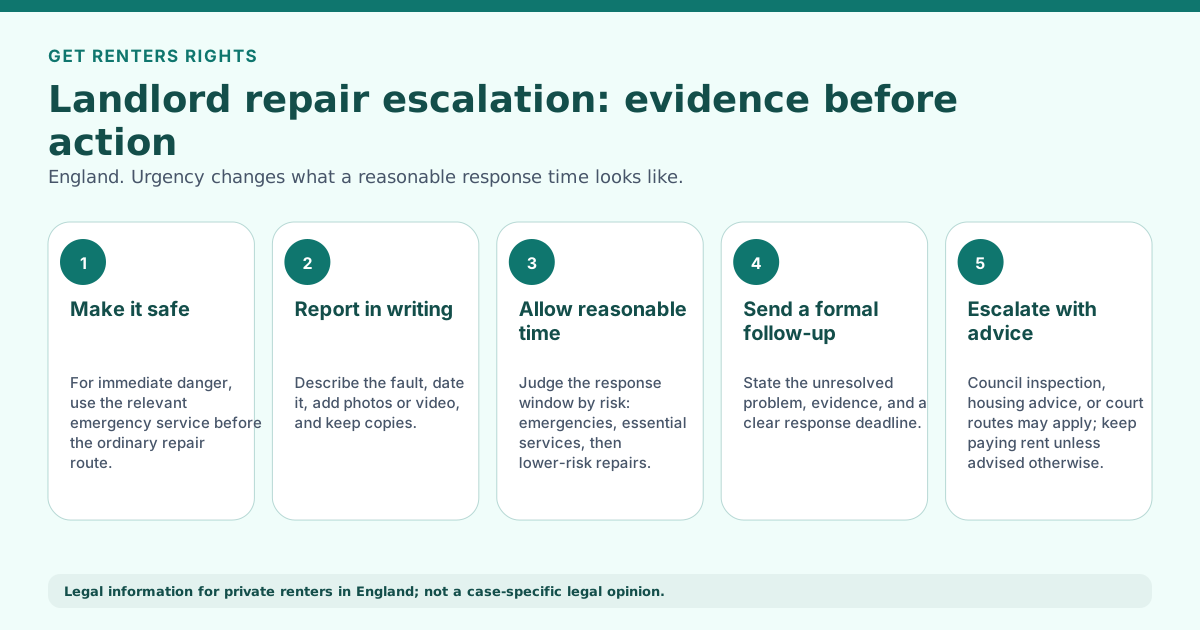
How can I escalate if the landlord refuses? If the landlord ignores a repair, escalate in stages: create a written record, give a clear deadline, involve the council where hazards are present, and get advice before court action or rent withholding. Report in writing, allow a reasonable time, send a formal letter before action, contact council Environmental Health where hazards are involved, and keep paying rent unless advised otherwise.
How does Awaab's Law affect damp and mould? Awaab's Law sets fixed response timescales for serious hazards, but it currently applies to social housing only - it is not yet in force for private renters, and no commencement date has been announced. Tenants should still report the problem clearly, keep photos, and note any health impact. Section 9A of the Landlord and Tenant Act 1985, inserted by the Homes (Fitness for Human Habitation) Act 2018, requires the property to be fit for human habitation throughout the tenancy.
What damages can I claim? Damages are about the loss caused by the disrepair, not only the fact that something was broken. Evidence usually matters: dates, photos, messages, rent paid, damaged belongings, extra costs, and any health records. Disrepair claims may include general damages for loss of amenity, special damages for actual losses, and health-related damages where evidence supports causation.
This is legal information, not legal advice. If your situation is urgent, call Shelter on 0808 800 4444 or contact your local Citizens Advice.
Source references: Landlord and Tenant Act 1985 sections 11 and 9A, Homes (Fitness for Human Habitation) Act 2018, and GOV.UK private renting repairs guidance.
What must the landlord repair?
The landlord is responsible for the building fabric and the fixed systems that make the home usable - heating, hot water, sanitation, water, gas, and electricity. Section 11 of the Landlord and Tenant Act 1985 imposes an implied repairing covenant on most short residential tenancies, and section 9A (inserted by the Homes (Fitness for Human Habitation) Act 2018) requires the property to be fit for human habitation throughout the tenancy. Damp, mould, structural defects, and other HHSRS hazards can engage these duties.
- Structure and exterior - walls, roof, foundations, windows, external doors, drains, gutters
- Installations for water, gas, and electricity - pipework, wiring, fixed appliances supplied with the property
- Sanitation - basins, sinks, baths, toilets, and waste pipes
- Space and water heating - boiler, radiators, immersion heaters, hot water cylinders
How long does the landlord have to fix repairs?
There is no universal private-renting repair deadline. For many defects within the dwelling, section 11 liability depends on actual or constructive notice and a reasonable opportunity to investigate and act. Severity, access, diagnosis, interim measures, and the work required all affect timing; a dated written report is usually the clearest evidence.
Practical urgency categories are not fixed legal deadlines: gas leaks are emergencies; floods, dangerous electrics, loss of cold water, winter heating failure, and serious security defects need urgent risk-proportionate action; hot-water loss, roof leaks, damp, mould, and cosmetic work depend on severity, cause, vulnerability, and continuing damage.
How can I escalate if the landlord refuses?
If the landlord ignores a repair, escalate in stages - create a written record, give a clear deadline, involve the council where hazards are present, and get advice before court action. Do not delay emergency action where there is immediate danger.
- Report in writing, dated, with a clear description and photos.
- Allow a reasonable time according to urgency and document any responses.
- Before a county court housing-conditions claim, follow the Housing Conditions Pre-Action Protocol where it applies.
- Ask council Environmental Health to assess any HHSRS hazard. If it identifies a Category 1 hazard, it must take appropriate enforcement action; a Category 2 hazard gives it a power to act.
- A housing-conditions claim may seek works and damages, but there is no fixed percentage tariff and track or costs consequences depend on CPR 26.9 and the claim.
- Section 82 of the Environmental Protection Act 1990 may provide a magistrates' court route if the statutory-nuisance elements and notice requirements are met; obtain advice first.
How does Awaab's Law affect damp and mould?
Awaab's Law has applied within the commenced social-housing regime since 27 October 2025. Most social tenants are covered, while supported housing, temporary accommodation, and licences require a status check. Hazard scope is phased. The PRS framework is not yet commenced and no PRS commencement date has been announced.
- Under the phase in force on this page's review date, investigate a potential significant damp or mould hazard within 10 working days and usually provide the written summary within 3 working days after the investigation.
- If a significant hazard is found, make the home safe within 5 working days after the investigation. Further work must start, or plans be made for it to start, within 5 working days, and all work must physically begin within 12 weeks at the latest.
- Investigate and make an emergency hazard safe within 24 hours; provide suitable alternative accommodation where the statutory conditions require it.
- None of these fixed timescales currently bind private landlords; private renters rely on the existing fact-specific repair, fitness, and HHSRS routes.
What damages can I claim?
Damages reflect proven loss caused by breach, not merely the existence of a defect. There is no fixed percentage tariff. Evidence can include dates, condition records, notice, rent paid, damaged belongings, extra costs, and medical or expert evidence where causation is disputed. A court may also order works where the legal test is met.
- General damages may reflect loss of amenity and reduced value of the occupation, assessed on the facts.
- Special damages require proof of consequential losses such as damaged possessions, extra energy costs, or alternative accommodation.
- Personal-injury damages require proof of duty, breach, causation, and loss; specialist advice and medical evidence may be needed.
Free checkers
- Repairs refusal checker
Run the free interactive repairs checker for an analysis of your specific situation. - Damp & mould checker
Check whether damp or mould engages the landlord's repair duty. - Damp and mould rights guide
Repair duties, fitness arguments, and council/court routes. - Awaab's Law explained
The current social-housing deadlines and why they do not yet bind private landlords.
Common repairs questions
- Your landlord won't fix repairs: what to do
The Section 11 repair duty, the council enforcement route, evidence to keep and court options. - How long does your landlord have to fix repairs?
Repair deadlines depend on urgency: the reasonable-time test, emergency repairs and escalation. - Emergency repairs and a landlord who will not act
Gas leaks, dangerous electrics, no water or heating, flooding, council action and injunctions.
Related guidance inside this topic
- If your next step turns on landlord repair duties, read no hot water tenant rights uk.
- For the dates, forms, and evidence behind landlord repair duties, see damp and mould repair escalation guide before you respond.
- If this issue overlaps with landlord repair duties, check black mould tenant rights guide to compare the legal tests.
- For a fuller breakdown of landlord repair duties, use repairs checker for the underlying rule set.
- If you need the route-specific rules on landlord repair duties, start with council repairs escalation guide so you can check the dates and documents against your own case.
Sources used for this guide
These are primary legislation and public guidance sources that support the legal-information framework used on this page.
- Landlord and Tenant Act 1985
Primary statute for core landlord repair duties, including structure, exterior, installations, heating, water, gas, and sanitation. - Homes (Fitness for Human Habitation) Act 2018
Primary statute adding a fitness-for-human-habitation duty for rented homes in England. - Housing Act 2004
Primary statute for tenancy deposit protection, HMO licensing, and local authority housing hazard enforcement. - GOV.UK: repairs in private renting
Government guidance on landlord repair responsibilities and what tenants can do when repairs are not carried out. - Shelter England: repairs
Independent housing charity guidance on repair duties, evidence, and escalation when a landlord does not act.
Related articles
- Tenant rights in England: complete guide
The main overview page linking eviction, repairs, deposit protection, rent increases, and illegal eviction rights together. - Damp and mould: your rights as a tenant
The repair, fitness, hazard, and evidence framework for damp and mould disputes in England. - Renter questions answered
Plain-English answers to the most-asked questions from private renters in England: eviction, deposits, rent increases, repairs, illegal eviction, and pets. - Awaab's Law explained for private renters
How Awaab's Law interacts with existing repair and fitness duties, and why implementation timing still matters. - How long does a landlord have to fix heating?
How long landlords have to fix heating in England: reasonable time, urgent winter loss, section 11 duties, evidence, and escalation routes.
Common questions
- What repairs is my landlord legally required to make?
- Section 11 LTA 1985 covers the structure and exterior of the property, the installations for water, gas, electricity, sanitation, space heating, and water heating. The Homes (Fitness for Human Habitation) Act 2018 adds an overarching fitness duty.
- How long does the landlord have to fix a repair?
- There is no universal private-renting repair timetable. Danger, severity, loss of essential services, knowledge where required, access, diagnosis, interim measures, and the work required affect whether the landlord had a reasonable opportunity to act. Awaab's Law has fixed periods within its commenced social-housing scope, not a universal private-renting deadline.
- Can I withhold rent until repairs are done?
- Withholding rent without setting it off against a damages claim is risky and can lead to arrears claims. The safer route is to keep paying rent and pursue damages or a counterclaim through the court. Get legal advice before withholding.
- What should I do first if my landlord will not repair something?
- Report the problem in writing, include photos or video if possible, keep paying rent, and give the landlord a reasonable time based on the urgency. If the issue is dangerous or the landlord ignores you, contact the council or get housing advice before taking further action.
Use the interactive checker on getrentersrights.com for the full step-by-step result.
